Lead Producer | ByteHack
• Led a 14-person indie team from preproduction to Steam release.
• Designed the core hacking mechanic that rewrites enemies and the environment.
• Built puzzle systems, including level challenges, ability interactions, and moment-to-moment gameplay flow.
• Guided level design, enemy behavior, and overall player experience across disciplines.
• Created level blockouts, iterated on puzzles, and worked directly with designers and programmers.
• Ran live QA sessions to gather feedback, identify issues, and drive iteration.
Trophy System
Breaking a Negative Feedback Loop
Early playtests showed a recurring issue:
Players were taking too long to finish levels.
In Byte Hack, time is pressure. The longer you stay in a level, the harder it becomes. Enemies stack, resources tighten, and mistakes compound.
What we saw instead was a negative feedback loop:
Players slowed down to “play safe”
Playing slow made the game harder
Harder gameplay caused them to slow down even more
We needed a system that encouraged momentum without forcing it.
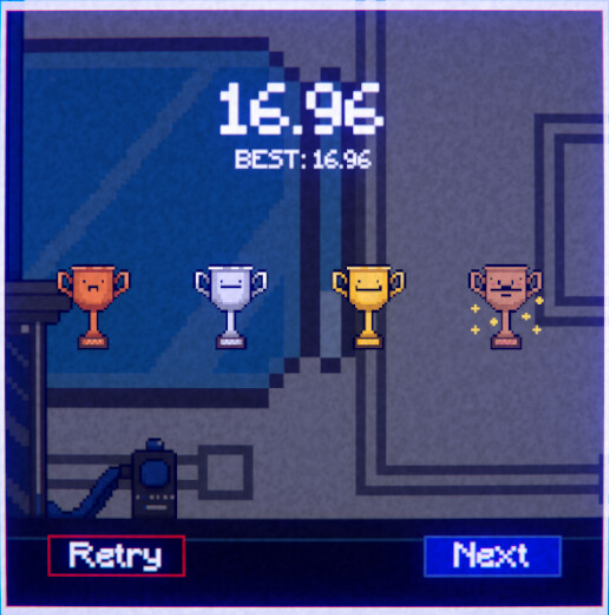
Time-Based Trophies
We introduced a familiar structure:
Bronze → Silver → Gold
The intent was simple:
Average players should earn Bronze on a first clear, or feel close to it.
Silver and Gold would reward improvement and mastery.
This clearly communicated one thing:
Finishing faster is better.
But it revealed a new gap
Gold Wasn’t Enough
Experienced players often earned Gold immediately.
They finished the level, saw the highest trophy, and moved on.
There was little reason to replay, explore, or experiment.
For a game built around mastery, this was a problem.

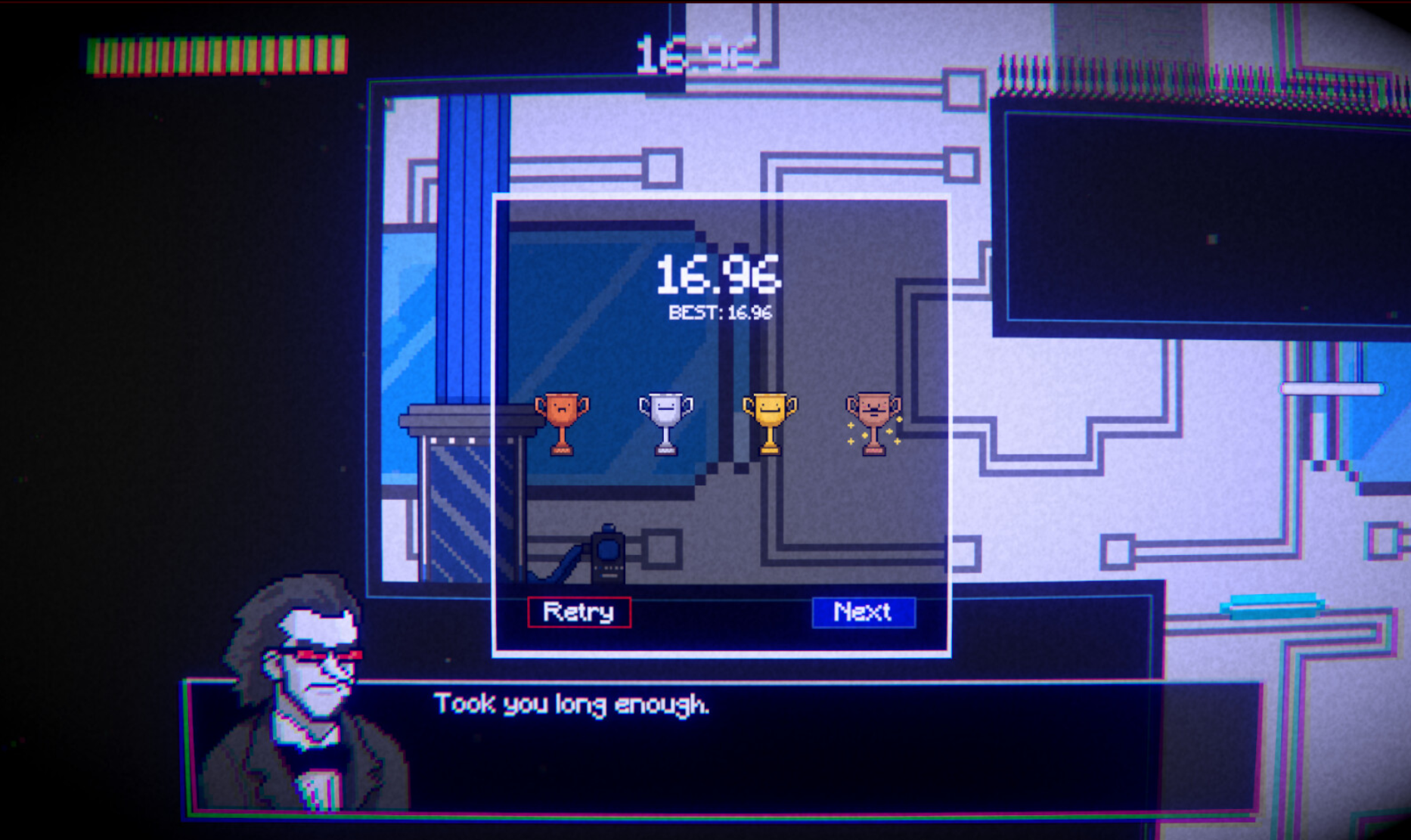
Introducing the Platinum Trophy
Platinum was designed as a statement, not just a reward.
It represented full level understanding.
Platinum times were intentionally extreme.
Seeing a requirement like 20 seconds made players think:
“That’s impossible.”
Then they realized:
“There must be a trick.”
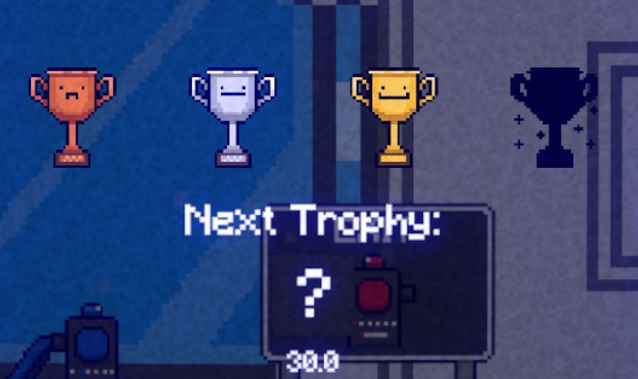
Previewing Trophy Times
I reinforced this by showing players the time needed for the next trophy.
This turned trophies into a direct callout:
“This level can be beaten faster.”
“If you’re good enough, it’s possible.”
Platinum became aspirational rather than arbitrary.
Motivation for Every Skill Level
The system naturally supported different players:
New players aimed for Bronze and Silver while learning mechanics.
Improving players chased Gold for consistency.
Hardcore players hunted Platinum by replaying, exploring, and optimizing routes.
Most importantly, it solved the original problem.
Players stopped slowing down.
They experimented.
They replayed.
They learned.
The trophy system didn’t just reward speed.
It taught players how Byte Hack was meant to be played
-
![An image of monoscrome.]()
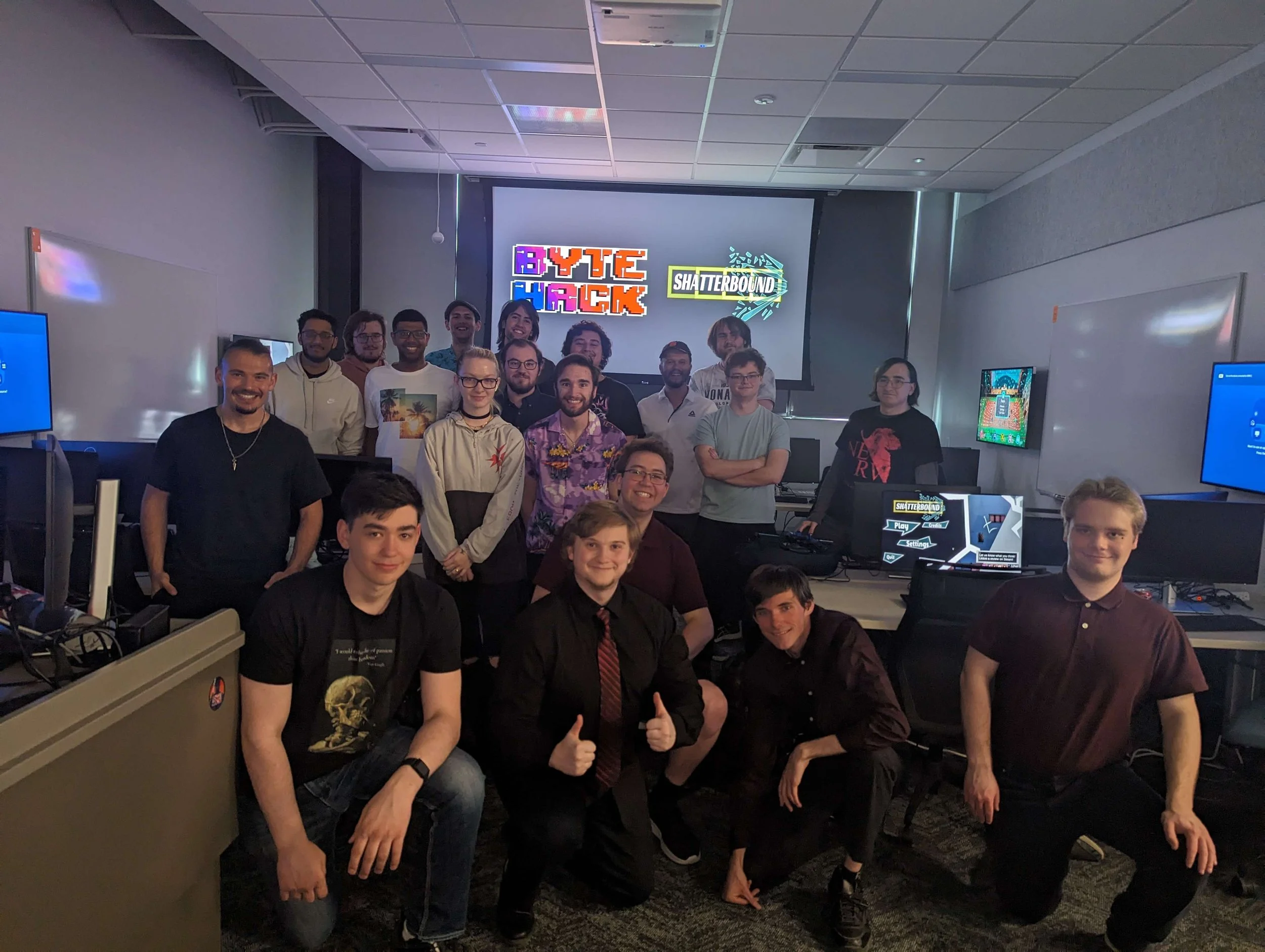
A picture of the whole team on release day.
-
![Image of sandwich]()
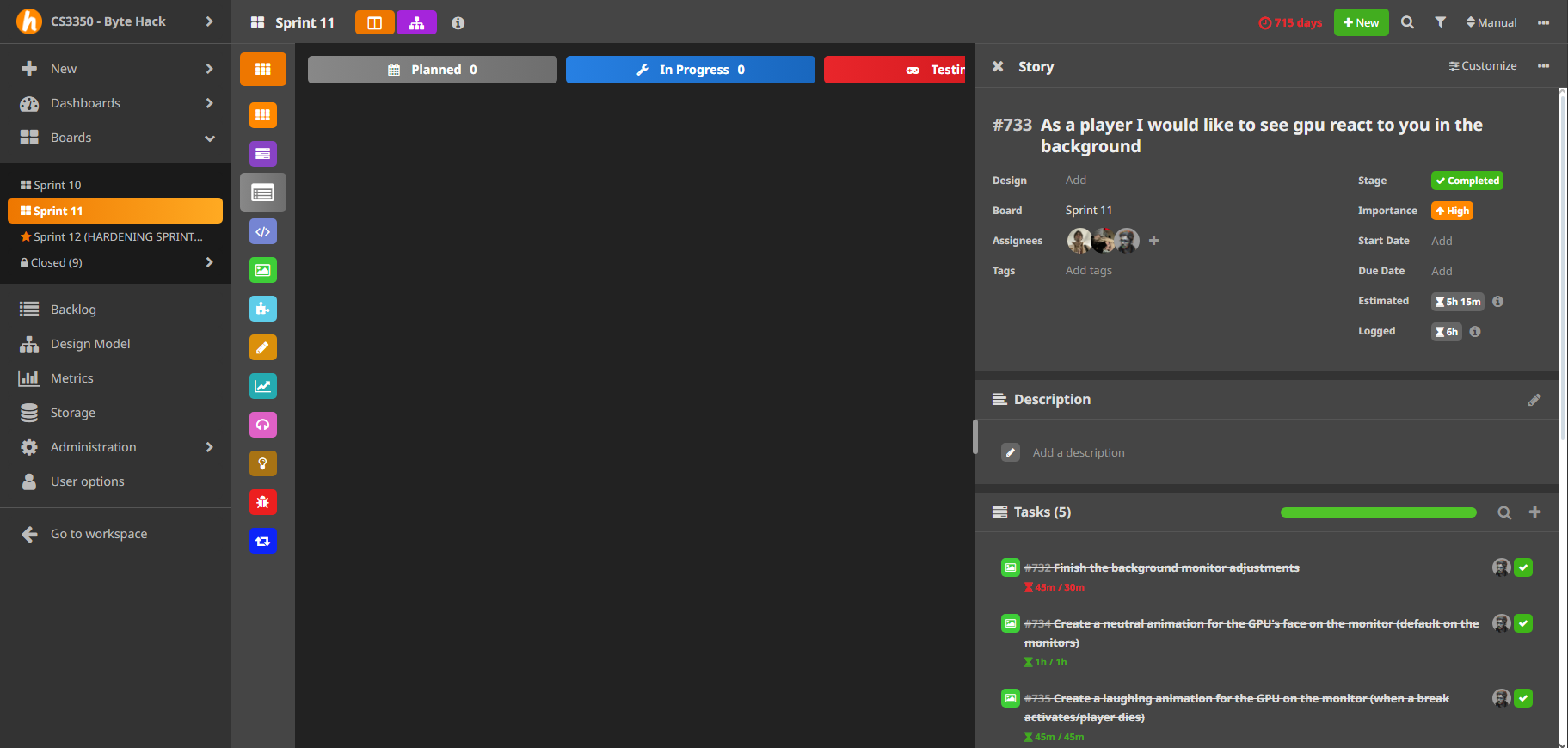
Example of Kanban board we had used.
-
![An image of popup ads.]()
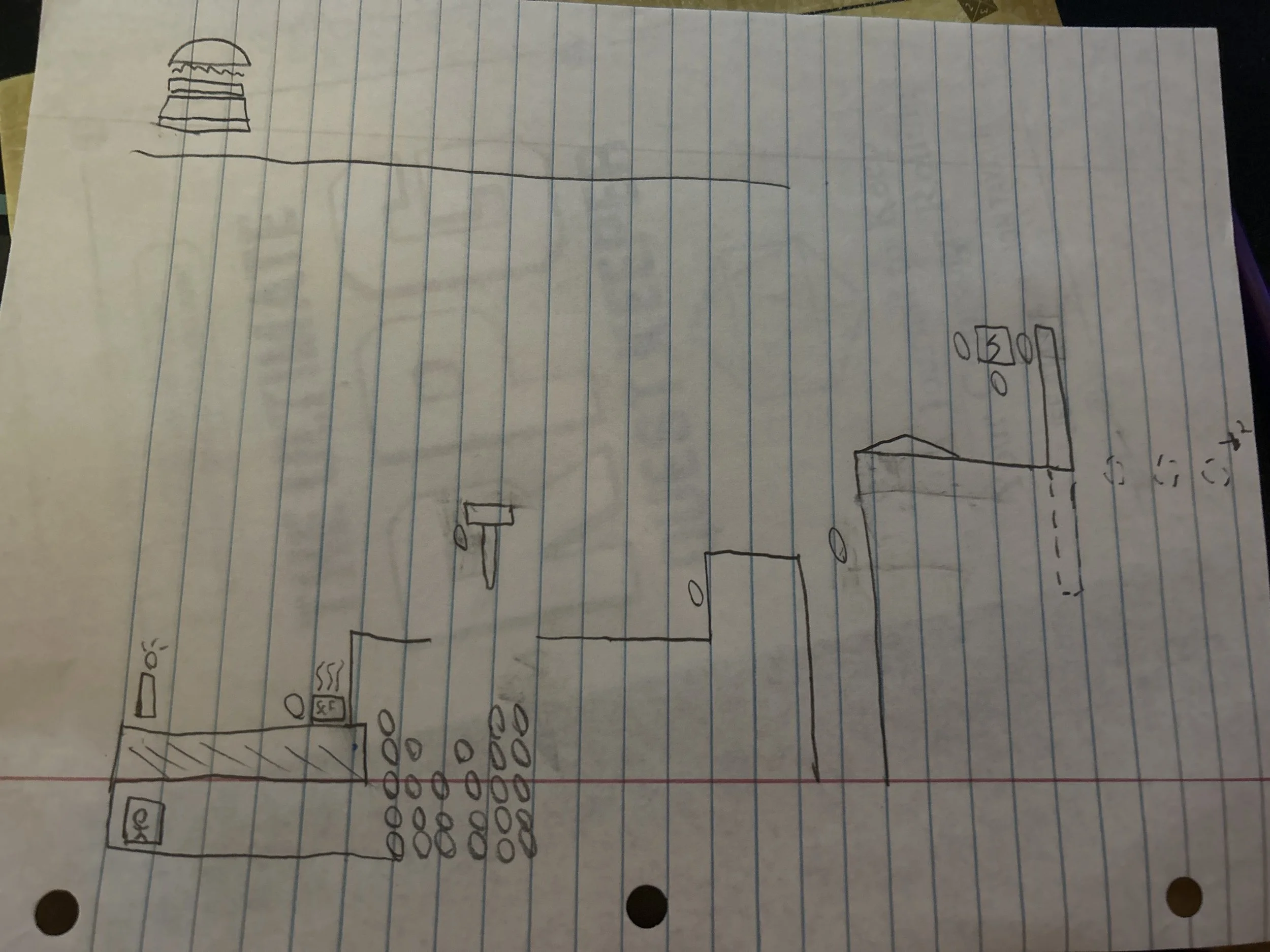
This is an image of some paper prototyping of a level.